
Happy MAL-o-ween!

We're treats-only this issue, no tricks. We have some newsbits and upcoming events, plus the first article from our new MAL Correspondent – all just for you!
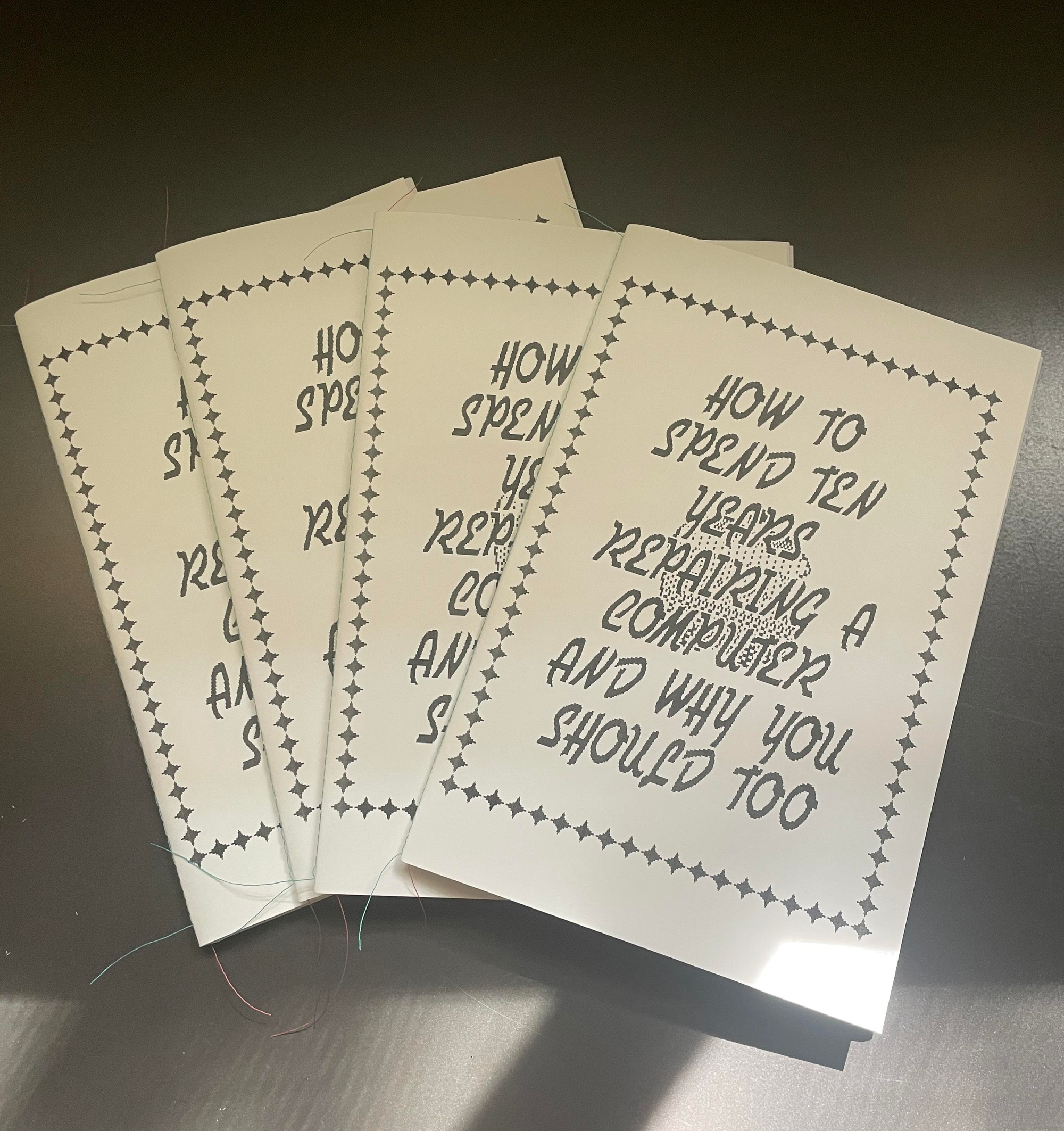
Get a copy of our Apple Lisa repair zine
Our new zine is here! It's titled How to Spend Ten Years Repairing a Computer and Why You Should Too - and we'd like to send out some free copies. First 50 emails with the subject line "Zine, please" to mediaarchaeology+zine@proton.me will get a copy (U.S. only, sorry folks, trying to keep our postage costs under control). You can also find a print-ready version of the zine at https://archive.org/details/lisazine
Collage Your Own Tarot
Drop in to the CASE W250 exhibit space on October 12 from 9AM - 5PM. Our grad resident Colleen will be guiding participants in the collage process and facilitating conversation around tarot as a technology of meaning-making.

MAL-o-ween Art Party
In the main lab on Wednesday October 14 from 3PM - 5PM! We'll be playing with vintage design software (KidPix, anyone?), making a collaborative zine, checking out some printing technologies & having a haunted media good time.

Whaaat!? Festival
This year the Whaaat!? Festival takes place in the ATLAS building on the CU Campus on Saturday November 7. We'll have a selection of games curated to fit in with the rest of the festival. Get more info & reserve tickets at their website - https://whaaat.io/. It's guaranteed to be a silly good time...
Practitioner In Residence Sessions Begin!
Our first resident joins us on October 5.
Cory McKague is a game developer, creative technologist, and educator whose work explores immersive storytelling, horror, embodiment, memory, and experimental interaction. His current practice centers on XR and game design, with an emphasis on creating strange, tactile, and emotionally charged interactive experiences that blur the boundaries between games, installation, research, and personal narrative.
Cory is an Assistant Professor of Game Design and Interactive Media at the University of Montana, where he teaches game development, game art, XR technologies, creative coding, and interactive media. His recent VR project, Watsonville, is a psychological horror experience set in a 1990s California trailer home and explores childhood memory, domestic space, fear, and imagination. His work has been presented in contexts including SXSW XR, FIVARS and Meaningful XR.
He holds degrees in education and creative technologies and is also an alumnus of the University of Colorado Boulder. His creative research often investigates how technology shapes perception, play, identity, and the stories we tell about ourselves.
Cory's plan for the residency is to create a small experimental horror game that explores why nostalgic media feels haunted, and how that haunted quality can inform immersive storytelling, embodiment, and play.
Watch our socials for events while Cory is in town, and drop by during open house hours to see what he's working on!
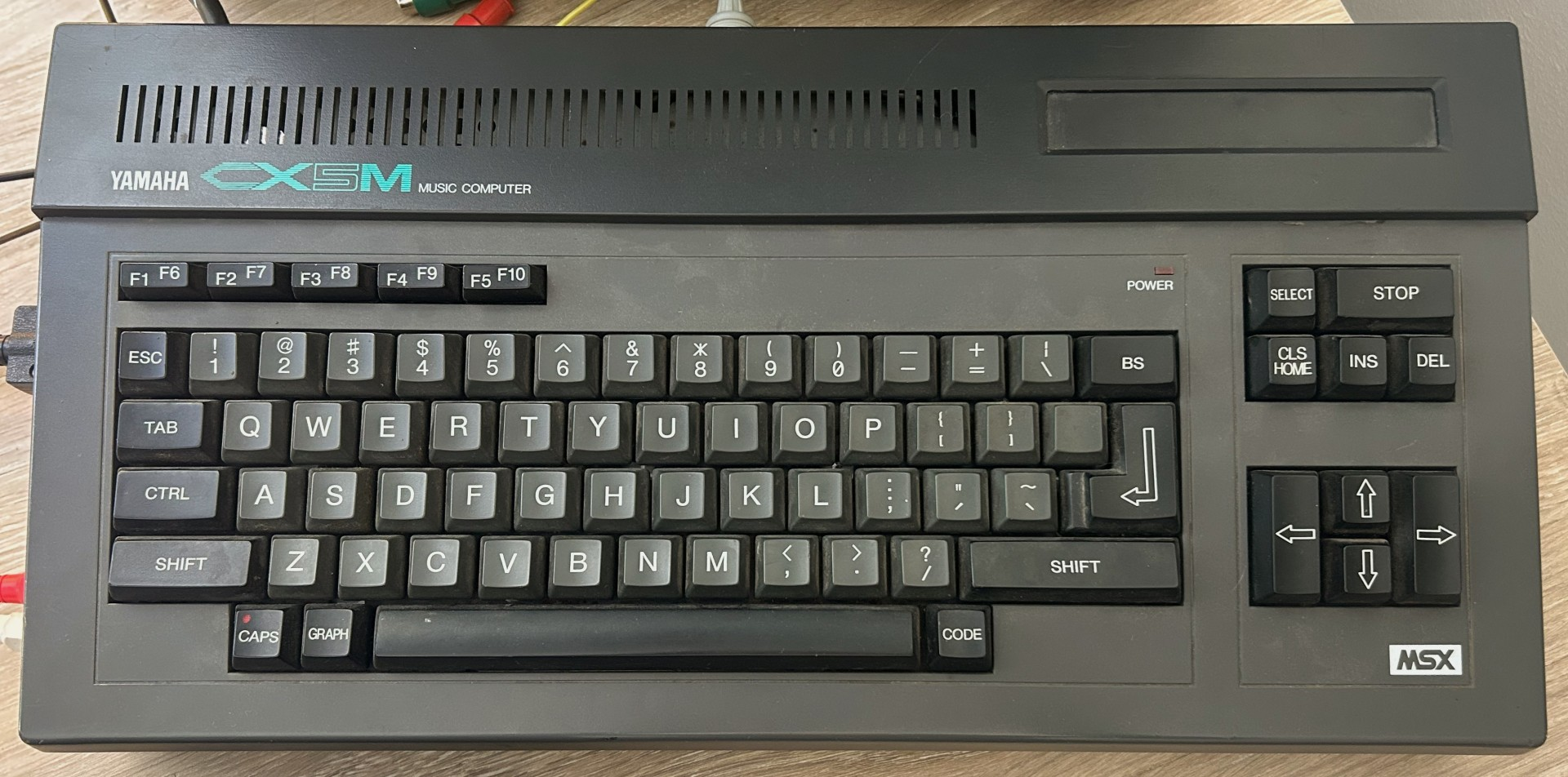
The Computer That Wanted to Make Music: Yamaha’s CX5M
Marin Mendell, MAL Correspondent
There is something deeply funny about the Yamaha CX5M.
At first glance, it looks like a normal early-1980s home computer: grey and beige, chunky keyboard, approximately zero interest in looking exciting. It is the kind of machine that looks like it should be sitting on someone’s desk while they balance a checkbook, write a very important letter, or spend 45 minutes trying to print something.
Except this particular computer wanted to make music.
Released in 1984, the Yamaha CX5M was a home computer built around the MSX standard, a Japanese computing platform that brought together machines from manufacturers including Sony, Canon, Toshiba, and Yamaha. Yamaha took the basic MSX computer and added something that made the CX5M considerably stranger- and considerably more interesting: music hardware. The result was a computer that could function as a computer, a synthesizer, a MIDI controller and a music-production machine all at once.
Now, that might not sound revolutionary in 2026. A laptop making music is so normal to us that we barely think about it. Open a digital audio workstation, load a software synthesizer, connect a MIDI keyboard, and you can have an entire recording studio running on something that also holds your emails and somehow still has 43 tabs open.
The CX5M came from a time when the idea of a computer being part of a musician’s instrument setup was still being figured out. And Yamaha was figuring it out in a particularly weird way.
So… What exactly was the CX5M?
The CX5M was built around a Z80 microprocessor, the same family tree of the processor found in many computers of the era. It had 32 kilobytes of RAM and 16 kilobytes of video RAM. To put that into perspective, modern computers routinely have millions of times more memory. The CX5M’s entire computing environment had less room to work with than a modern photograph.
And yet, it made music.
The computer ran MSX BASIC and, like other home computers of the time, booted directly into a BASIC command line. There were no sleek graphical desktops waiting for you to tell it what to do.
That actually makes the CX5M particularly charming.
Imagine turning on your futuristic 1984 music computer and being greeted by a screen that basically says: Okay. What do you want me to type?
The music capabilities came from Yamaha’s SFG01 expansion unit, which also added stereo outputs, MIDI OUT, and a connector for an external keyboard. The later SFG05 upgrade added MINI IN and improved music software. The CX5M also contained a Yamaha FM sound chip, meaning the computer wasn’t simply controlling an external synthesizer. It had actual synthesis hardware built into the system. In other words, Yamaha didn't just make a computer that could talk to a synthesizer. They made a computer that was becoming part of the synthesizer.
The FM Part:
This is where the CX5M gets particularly interesting. The sound system used FM synthesis, or frequency modulation synthesis. If that sounds like something from an electrical engineering textbook designed to make you specifically stop reading, I understand that. But, the basic idea is actually pretty cool.
FM synthesis creates sounds by using one signal to change the frequency of another. Instead of simply generating one basic waveform and shaping it, the system can have oscillators interact with each other to create much more complex sounds.
Yamaha’s system used four- operator FM synthesis. An “operator” is essentially a building block that can generate or modify a sound, and different arrangements of those operators create different tonal characteristics.
This was one of the technologies that helped give Yamaha synthesizers of the era their famously digital sound. FM synthesis could produce sounds that were difficult to get from traditional analog synthesizers: bright electric- piano tones, metallic sounds, bells, glassy textures, and plenty of sounds that seem to mainly exist because someone turned a knob and thought it sounded somewhat cool.
The CX5M’s four operator FM system wasn’t identical to Yamaha’s much more famous six-operator DX7, but it belonged to the same broader technological family. The CX5M was effectively putting a real digital synthesis engine inside a home computer.
This distinction matters.
The computer wasn’t merely being used to write down music. It was actively involved in creating the sound. The CX5M represents a moment when the boundary of computers was becoming much less clear. It explored the idea that a computer could be a musical instrument rather than simply a tool sitting next to one.
The Beauty of Doing a Lot with Very Little:
The CX5M is also a good reminder that technological importance doesn’t necessarily come from raw power. The machine’s specifications look almost comically small next to anything from the technology we have now.
But the designers weren’t trying to compete with the modern computer, they were working within the limits of the 1980s and asking the question: What can we make this computer do?
The CX5M could run ordinary MSX software, accept cartridges, connect to external keyboards, send MIDI information, and work with Yamaha’s own musical hardware. The result was a machine sitting somewhere between a home computer and a synthesizer- two categories that would eventually become much less separate.
From Gray Box to Digital Studio:
The cool thing about looking backward at technology is that the future rarely looks futuristic while you’re living through it.
In 1984, the CX5M was a strange little machine combining worlds that didn’t necessarily need to be combined yet. It was a computer that made music, a synthesizer that ran software, and a piece of music equipment that happened to boot into BASIC.
Today, the basic computer barely raises an eyebrow.
Our computers are studios. Our phones are recording devices. Software can imitate entire synthesizers. A musician can carry more sounds in a laptop than an entire room of 1980s equipment could provide.
The Yamaha CX5M wasn’t the beginning or end of computer music, and it certainly wasn’t the most powerful computer of its era. Its significance is more interesting than that. It was one of the machines experimenting with the relationship between computers and music before that relationship became completely ordinary.
So yes, the CX5M is a digital box with a tiny amount of memory and an interface that makes modern software look like science fiction.
It may have needed a command line and a questionable amount of patience to make music, but at least it had the decency to do something more interesting than check an email.
We'll be sharing info about resident events as we have it! Keep up with us on Mastodon, bluesky, and instagram as usual - or visit one of our locations in person!
That's all for now friends!
🌈🎃MAL